Infrastructure · Visual Explainer
Bare Metal vs VM vs Container
The concept
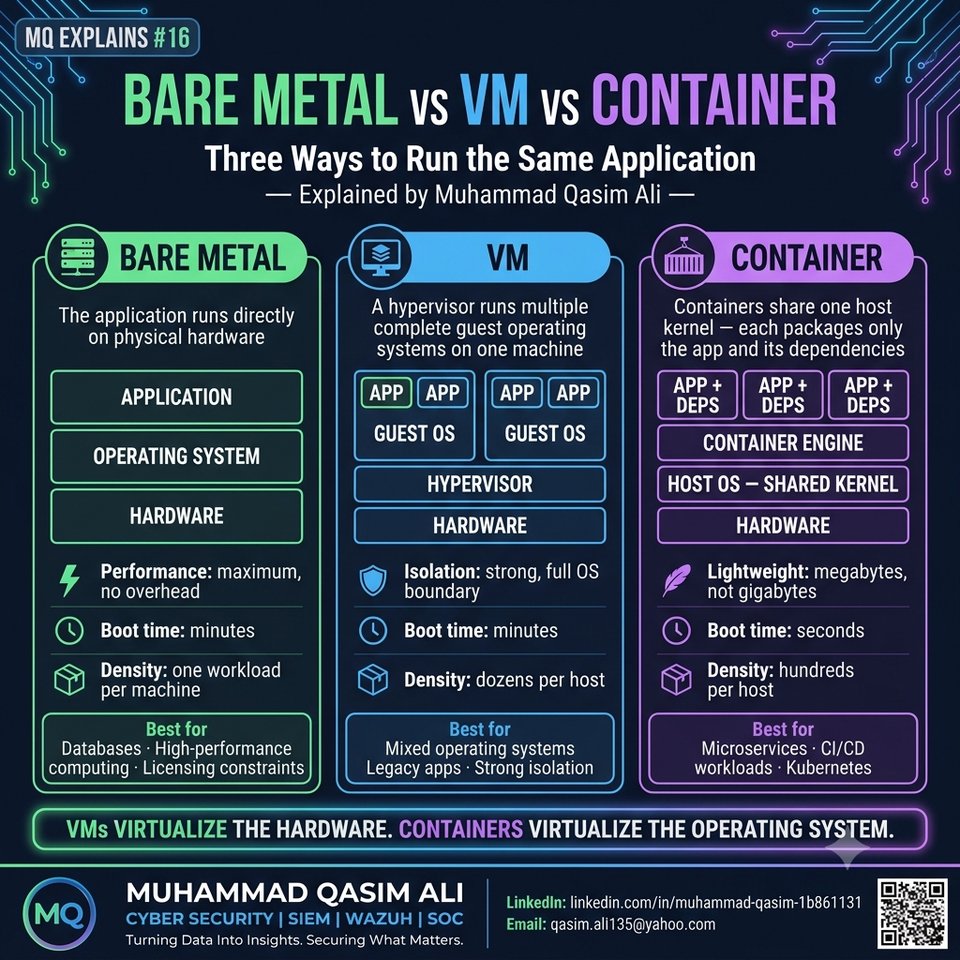
Three ways to run the same application, defined by what gets shared. Bare metal: the app owns the hardware. VMs: a hypervisor runs multiple complete guest operating systems. Containers: everyone shares one host kernel and each container packages only the app and its dependencies.
Key distinctions
| Term | What it means |
|---|---|
| Bare metal | Hardware → OS → app. Maximum performance, no virtualization tax, one workload per machine. For databases and licensing constraints. |
| VM | A hypervisor presents virtual hardware; each guest runs its own full kernel. Strong isolation, minutes to boot, dozens per host. |
| Container | Namespaces and cgroups fence each app, but there's one shared kernel. Megabytes not gigabytes, seconds to boot, hundreds per host. |
| The summary | VMs virtualize the hardware. Containers virtualize the operating system. Real platforms run containers inside VMs — layers, deliberately. |
Why it matters in practice
The mature answer isn't tribal — it's all three at once, each chosen for what it's best at. Containers get weaker isolation for their speed, which is why they run inside VMs for hostile multi-tenancy.